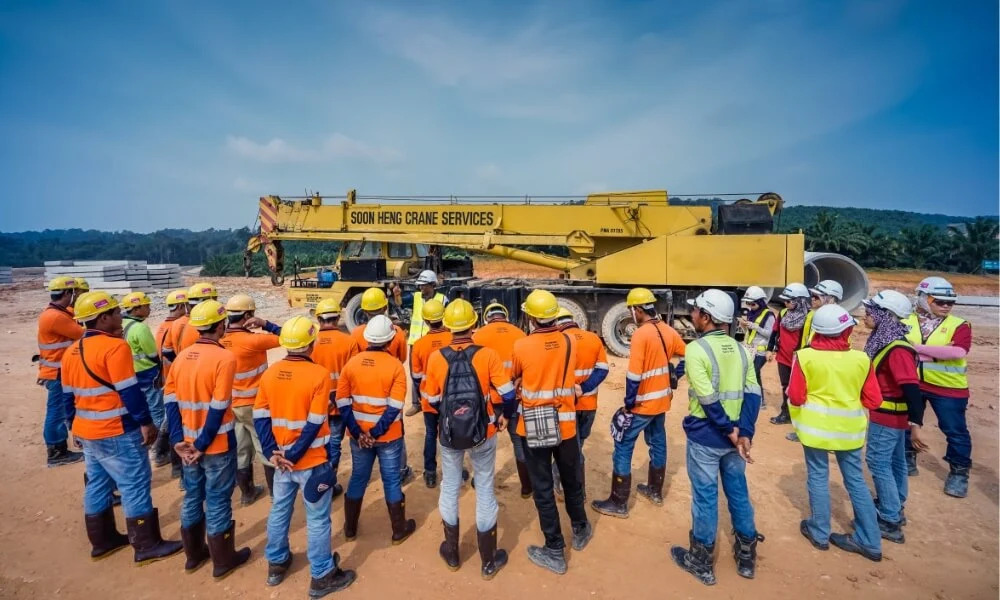
Safety doesn’t start with a manual or a poster on a break room wall. It starts with conversation—short, timely, and relevant. That’s where toolbox talks come in. These aren’t long-winded lectures or corporate compliance checkboxes. They’re frontline safety interventions: 5 to 15-minute discussions that happen where the work happens, led by supervisors or team leads, and focused on real-time hazards and safe practices.
In high-risk industries like construction, manufacturing, and utilities, toolbox talks are more than routine—they’re a critical line of defense against accidents. But despite their widespread use, many teams still treat them as box-ticking exercises. The result? Missed opportunities, disengaged crews, and preventable incidents.
So what are toolbox talks, and why do they work when done right?
The Core Purpose of a Toolbox Talk
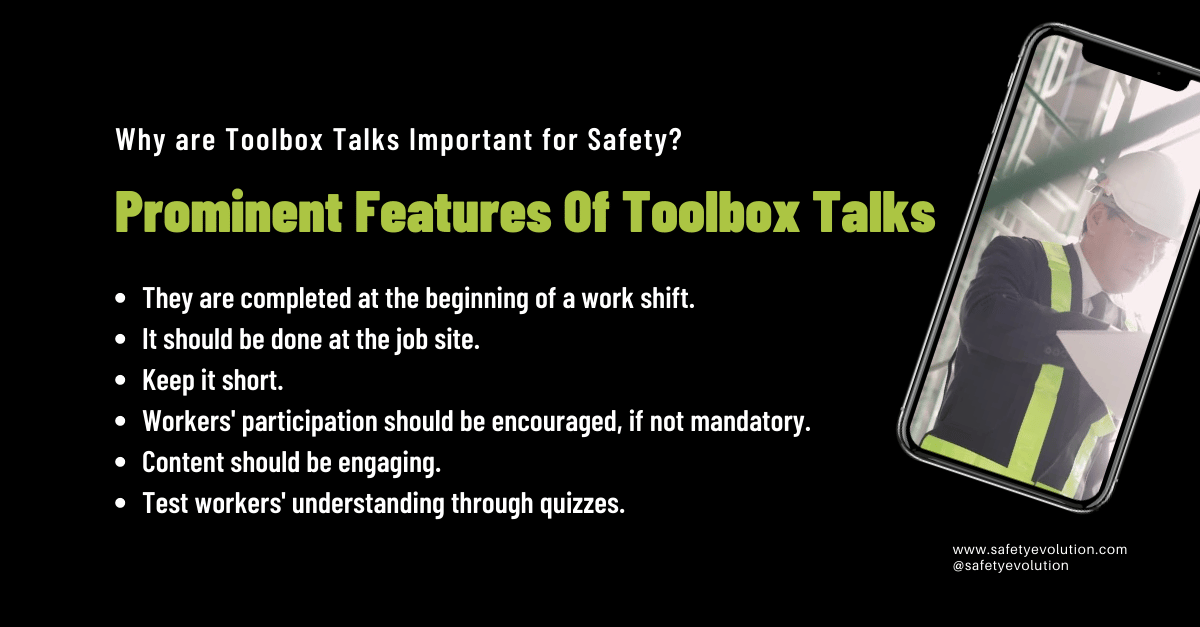
A toolbox talk is a brief safety meeting held at the start of a shift, before a specific task, or in response to a near-miss or changing conditions. The goal is simple: keep safety top of mind. Unlike formal training sessions, these talks are informal, interactive, and focused on immediate risks.
They typically cover: - A single hazard (e.g., working at heights, electrical safety) - Safe work procedures for the day’s tasks - Equipment checks or PPE reminders - Lessons from recent incidents or close calls
These sessions are most effective when they’re visual, conversational, and involve the crew. A supervisor might hold up a frayed extension cord and ask, “Would you use this?” prompting discussion instead of delivering a monologue.
Why Toolbox Talks Are More Than Just Talk
Many teams assume that as long as a talk was “held,” the job is done. But the real value isn’t in checking a box—it’s in changing behavior.
Consider a roofing crew preparing for a day on a steep pitch. A standard toolbox talk might cover fall protection. An effective one goes further: it brings out harnesses, inspects anchor points, and asks each worker to describe their fall arrest plan. This transforms awareness into action.
Real-world impact includes: - 25–40% reduction in incident rates when talks are consistent and relevant (OSHA findings) - Faster hazard identification by frontline workers - Stronger team communication and accountability - Improved compliance during audits
The difference lies in quality, not frequency. A weekly scripted talk read from a paper won’t move the needle. A daily 10-minute huddle tied to the day’s task will.
When and How Often Should You Hold Them?

There’s no universal rule, but best practices suggest: - Daily at shift start for high-risk environments (construction, utilities) - Before high-risk tasks (confined space entry, hot work) - After incidents or near-misses to reinforce lessons - Weekly for lower-risk settings with stable conditions
Timing matters. Holding a toolbox talk an hour before the crew hits the site reduces retention. The closer to the task, the better.
Common scheduling mistakes: - Conducting talks off-site or in an office - Relying on one person to deliver every talk - Skipping sessions during “quiet” periods - Using generic topics unrelated to current work
A paving crew, for example, should never have a toolbox talk about forklift safety if they’re not using forklifts that day. Relevance builds credibility.
Structure of an Effective Toolbox Talk
A solid format keeps discussions focused and actionable. Here’s a practical framework:
- Gather the team – On-site, before work begins.
- Introduce the topic – Name the hazard or task (e.g., “Today: Excavation Safety”).
- Explain the risk – Use visuals, real examples, or site conditions.
- Discuss controls – What PPE, procedures, or safeguards are required?
- Ask for input – “Have you seen this go wrong before?” or “What would you do differently?”
- Confirm understanding – One-sentence recap from each worker.
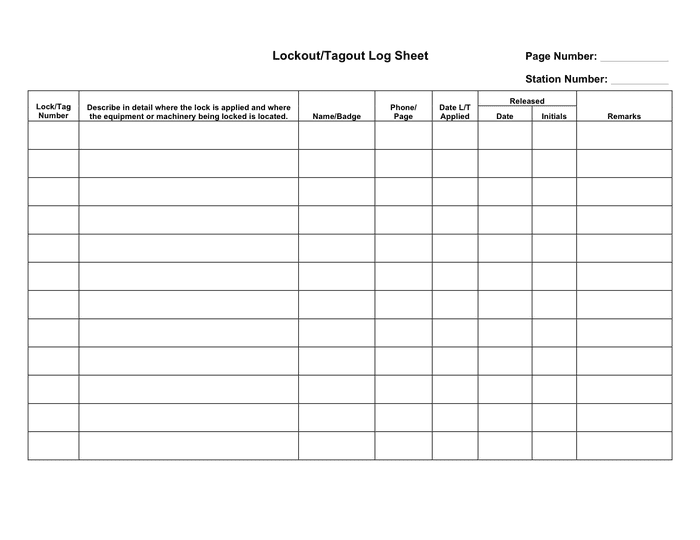
- Document briefly – Sign-in sheet with topic, date, attendees.
Documentation isn’t about bureaucracy—it’s about traceability. If an incident occurs, you need proof that the risk was communicated.
Common Pitfalls and How to Avoid Them
Even experienced teams fall into traps that dilute the impact of toolbox talks.
1. Scripted, one-way delivery Reading a pre-written talk kills engagement. Workers tune out. Fix: Use the script as a guide, not a script. Ask questions. Listen.
2. Repetitive or irrelevant topics Covering “slips and trips” every Monday gets stale. Fix: Rotate topics based on seasonal risks, project phase, or incident trends.
3. No follow-up or accountability If unsafe behavior continues after a talk, the message is undermined. Fix: Supervisors must enforce what’s discussed. Call out deviations immediately.
4. Skipping talks during overtime or rush jobs This signals that safety is optional under pressure. Fix: Treat the talk as a non-negotiable prerequisite—like fuel for a machine.
5. No worker participation If only the supervisor speaks, it’s not a talk—it’s a lecture. Fix: Assign crew members to lead occasional sessions. Rotate responsibility.
Real-World Toolbox Talk Examples
Let’s see how this works in practice.
Example 1: Electrical Safety (Commercial Renovation) Topic: Working near live panels Hazard: Arc flash risk during panel upgrades Discussion: Supervisor shows a photo of damaged insulation. Asks: “What’s wrong here? How could this have been prevented?” Crew identifies improper PPE and lockout failure. Team reviews LOTO procedures and confirms all arc-rated gear is on site.
Example 2: Heat Stress (Summer Roadwork) Topic: Staying safe in high temps Hazard: Dehydration, heat exhaustion Discussion: Lead asks: “Who’s felt dizzy on the job in heat like this?” Shares hydration plan, shaded break schedule, and buddy system. Each worker names their water bottle and agrees to check on their partner hourly.
Example 3: Ladder Safety (Warehouse Maintenance) Topic: Proper ladder use Hazard: Falls from incorrect setup Demo: Supervisor sets up a ladder at the wrong angle. Asks: “Would you climb this?” Crew corrects it using the 4:1 rule. Everyone practices the “belt buckle test” before use.
These aren’t hypotheticals—they’re proven methods that turn knowledge into behavior.
Integrating Toolbox Talks into Your Safety Culture
A single talk won’t change a culture. Consistency and integration will.
Start by: - Training supervisors in facilitation, not just content - Aligning topics with JSA (Job Safety Analysis) documents - Using incident data to guide future topics - Recognizing crews that report hazards after a talk
Some companies go further: they film short talks for remote teams, use digital sign-in apps, or reward workers who suggest topics. The tools vary, but the principle remains—make safety part of the daily rhythm.
When toolbox talks are predictable, participatory, and practical, they stop being “meetings” and start being moments of real protection.
Tools and Templates That Help
You don’t need expensive software to run effective toolbox talks—but the right resources can streamline the process.
Here are five practical tools used by safety managers:
| Tool | Use Case | Pros | Cons |
|---|---|---|---|
| SafetyCulture (iAuditor) | Mobile checklists, talk logging, photo evidence | Real-time reporting, cloud storage | Subscription cost |
| SiteDocs | Pre-built talk templates, digital signatures | OSHA-aligned, easy customization | Requires training |
| SmartSAFE | Industry-specific topics, multilingual support | Great for multilingual crews | Limited free tier |
| Toolbox Talks Library (NIOSH/OSHA) | Free downloadable PDFs | No cost, authoritative content | Generic, needs customization |
| Google Forms + Sheets | DIY tracking and attendance | Free, flexible | Manual follow-up needed |
Choose based on your team size, risk level, and tech comfort. Even printed checklists work—if they’re used consistently.
Final Thoughts: Make Every Minute Count
Toolbox talks are not a formality. They’re a frontline defense—a chance to pause, assess, and protect. When done well, they build awareness, reinforce procedures, and save lives.
The most effective sessions aren’t the longest or most polished. They’re the ones where workers speak up, supervisors listen, and everyone walks away clearer on how to do the job safely.
Don’t wait for an incident to prove their value. Start today: pick a real hazard, gather your team, and talk. Not at a desk. Not in a conference room. Right where the work happens.
Because safety isn’t a policy. It’s a practice. And toolbox talks are one of the sharpest tools in the kit.
Act now: Run your next toolbox talk on a current task. Ask one open-ended question. Document attendance. Repeat tomorrow.
FAQ
What should you look for in What Are Toolbox Talks and Why They Matter on Every Job Site? Focus on relevance, practical value, and how well the solution matches real user intent.
Is What Are Toolbox Talks and Why
They Matter on Every Job Site suitable for beginners? That depends on the workflow, but a clear step-by-step approach usually makes it easier to start.
How do you compare options around What Are Toolbox Talks and Why They Matter on Every Job Site? Compare features, trust signals, limitations, pricing, and ease of implementation.
What mistakes should you avoid? Avoid generic choices, weak validation, and decisions based only on marketing claims.
What is the next best step? Shortlist the most relevant options, validate them quickly, and refine from real-world results.